
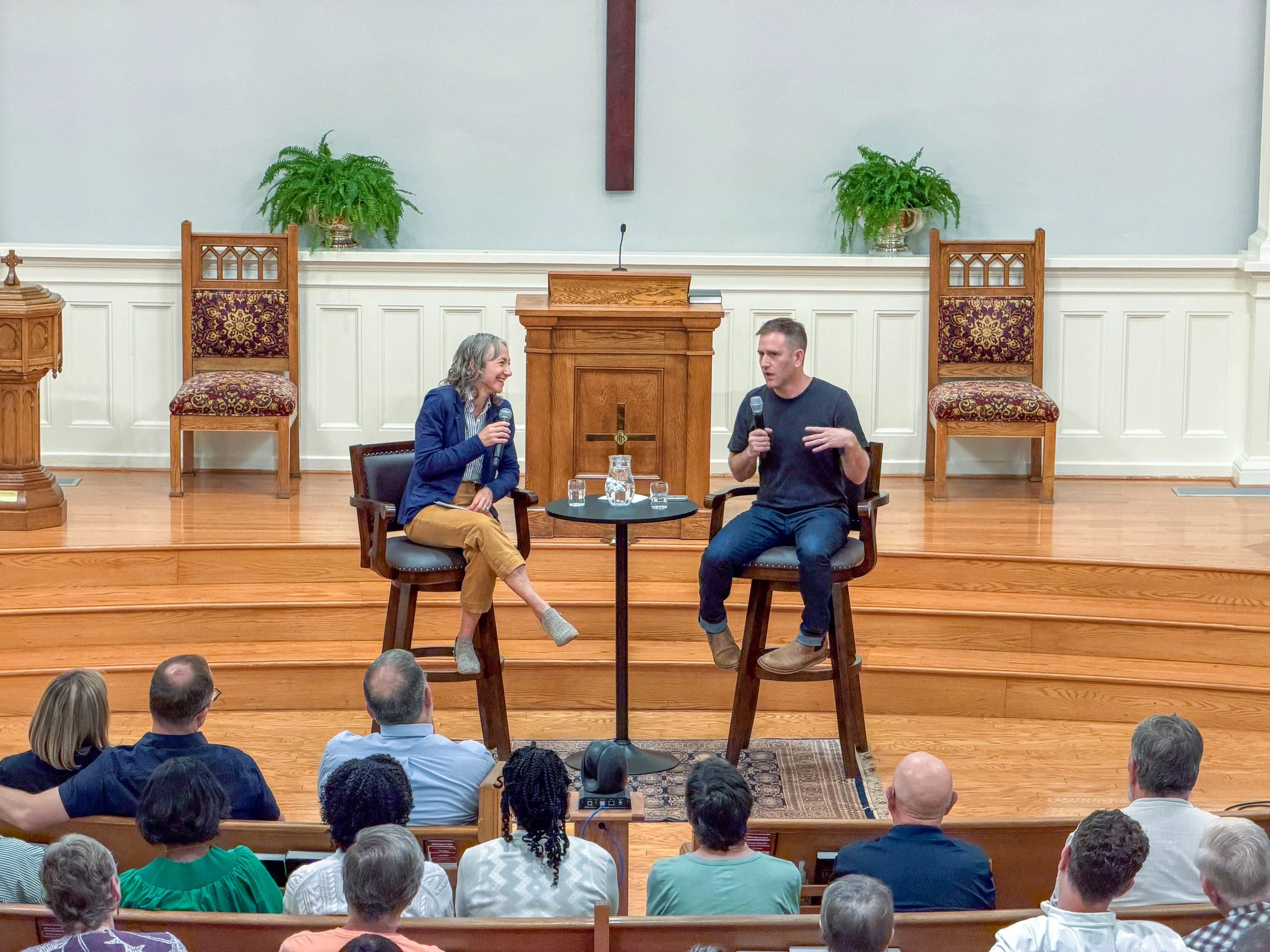
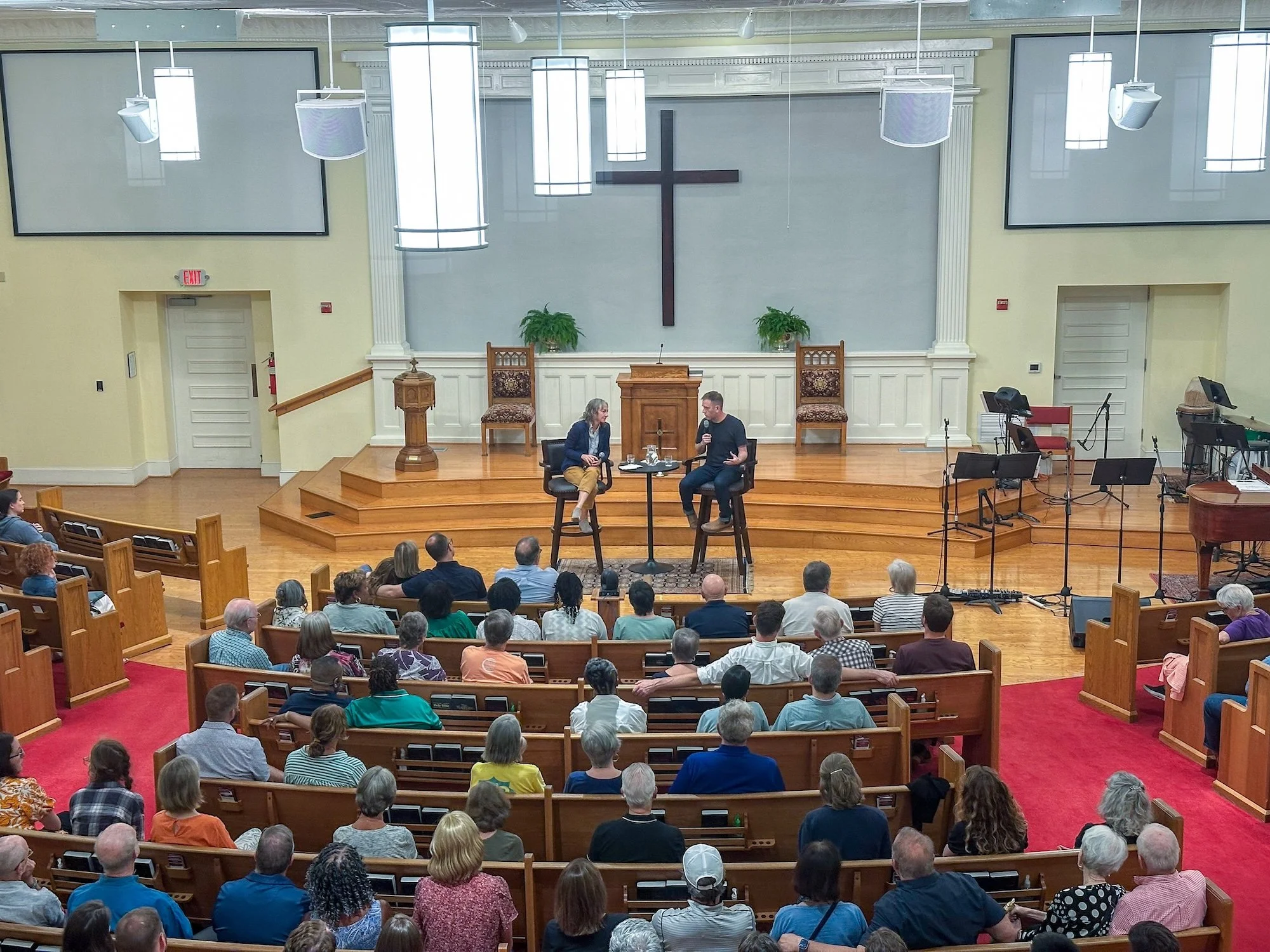
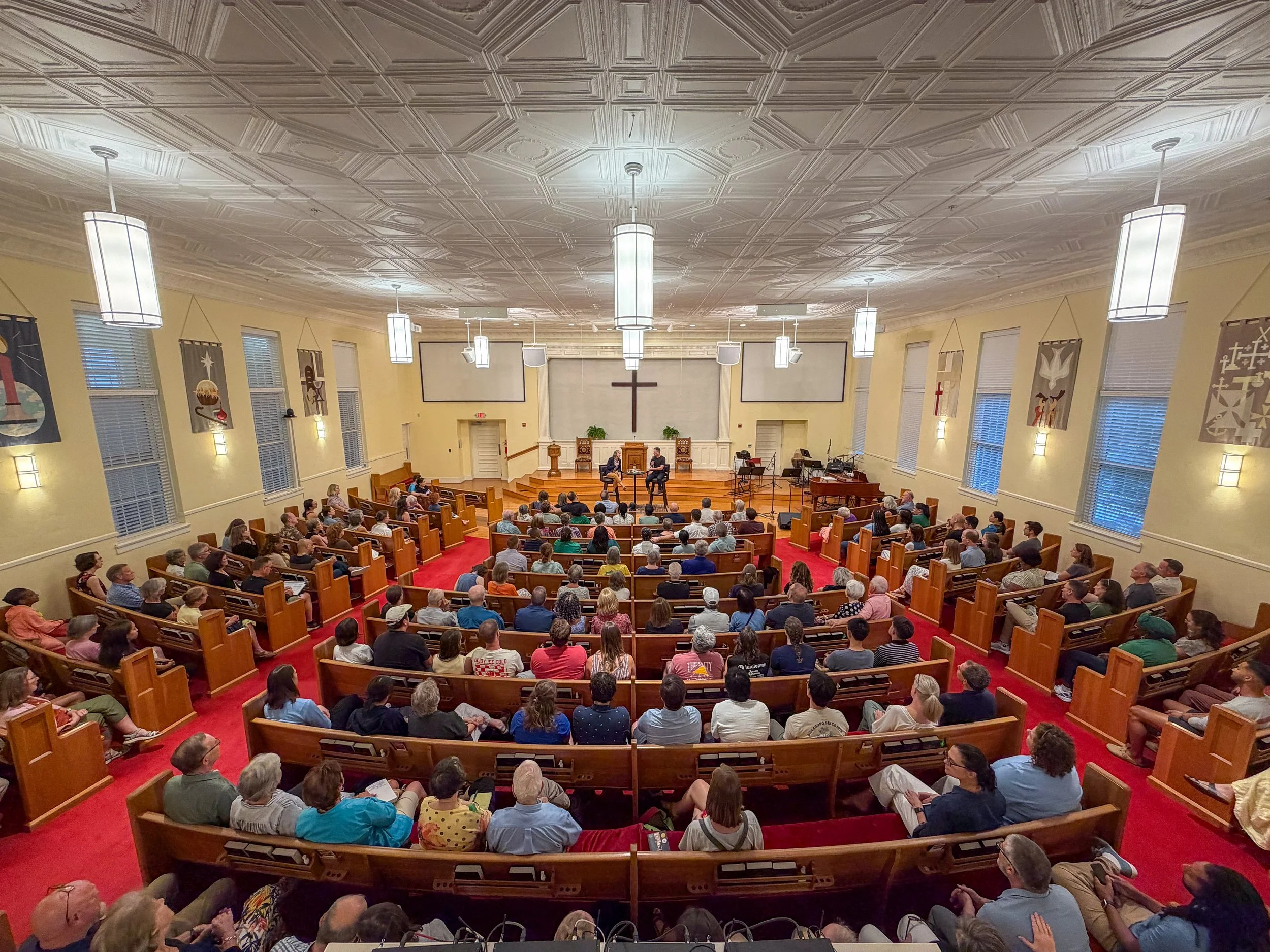
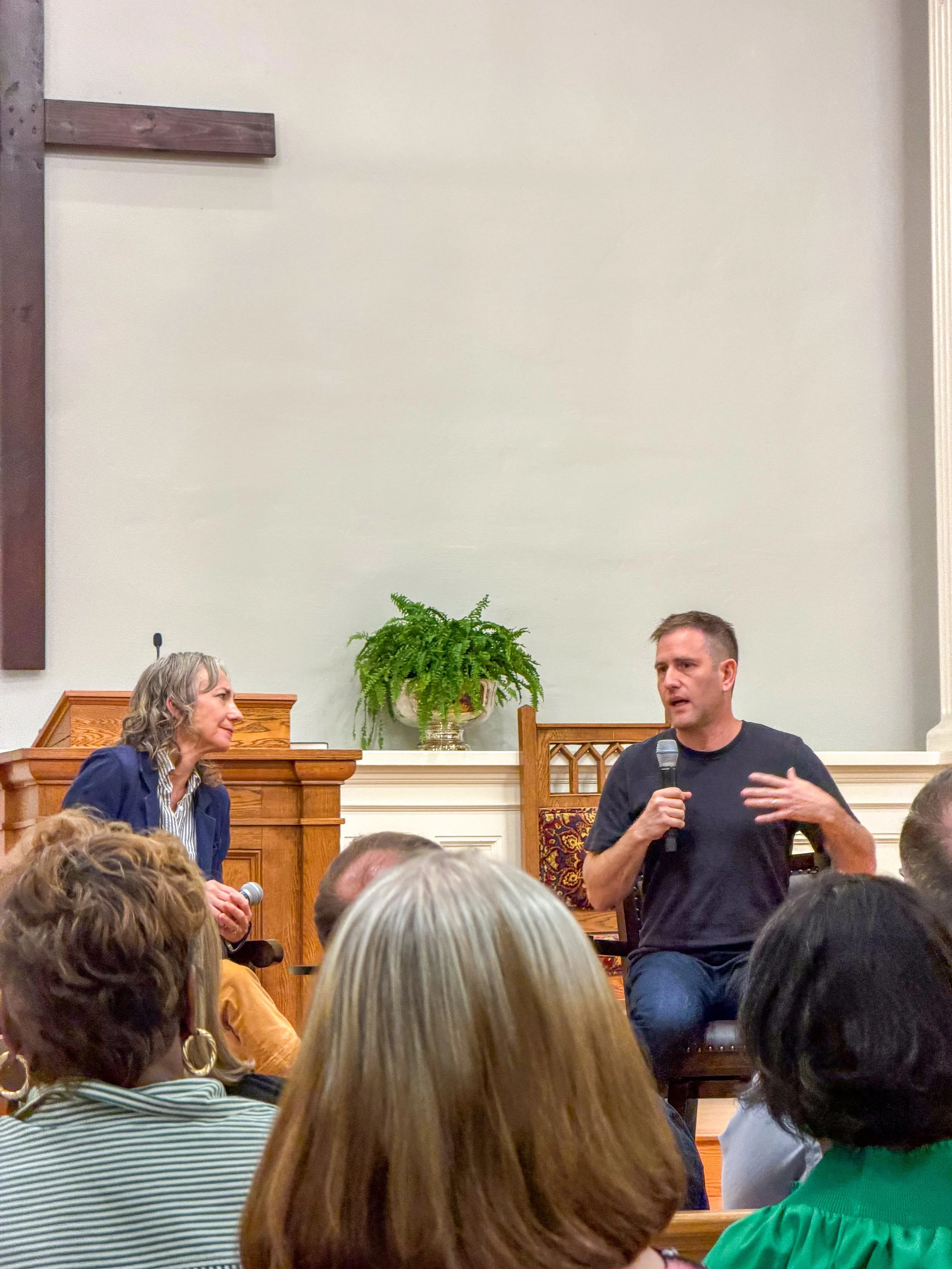
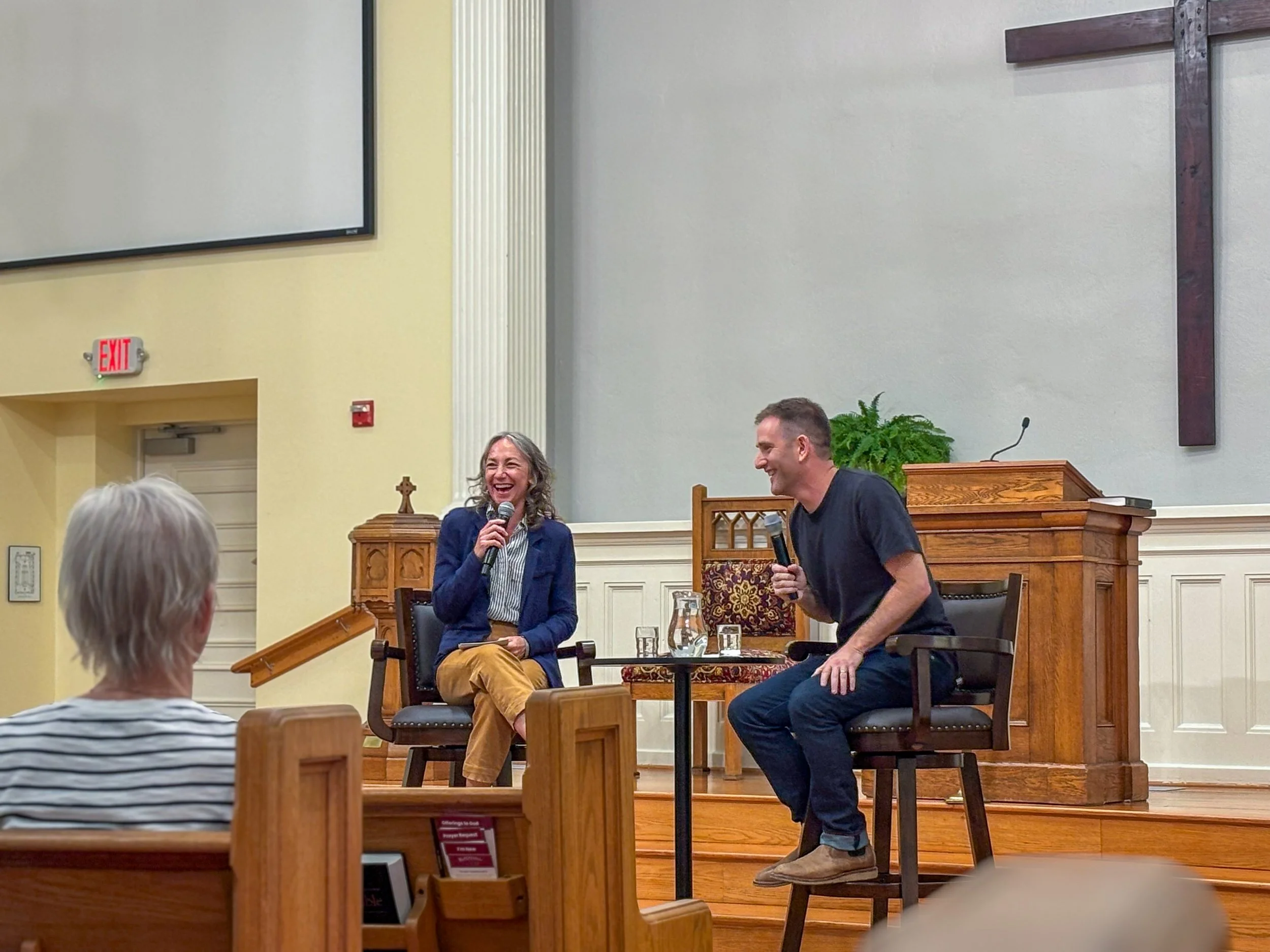
Homelessness is not simply a problem of unemployment, addiction, or individual failure. It’s increasingly a housing crisis affecting people who work, raise families, and contribute to their communities. These ideas were central to Blacknall’s Community Conversation on Homelessness with journalist Brian Goldstone on Friday, Aug. 14.
Brian, author of “There Is No Place for Us: Working and Homeless in America,” joined Pastor Goodie Bell for a conversation that explored the hidden realities of housing insecurity. Brian spent six years investigating the systems that can push working families into homelessness, culminating in his Pulitzer Prize-winning book, which tells the stories of five Atlanta families struggling to remain housed in a gentrifying and increasingly unequal city. Despite working multiple jobs, “it still wasn't enough to secure this most basic human necessity: a roof overhead,” he said.

Join us on Friday, Aug. 28 for an event to benefit Blacknall ministry partners who help Durham’s homeless. Learn More
“There's this vast, largely invisible population of people who, you know, they're not on the fringes of our cities, they're not on the fringes of our society. Their work, their labor, their bodies are physically powering the growth that our cities are seeing,” Brian told a crowd of about 150. “They’re powering the beautiful revitalization and all the development. And yet, they're not only being often priced out of the neighborhoods they grew up in, they are increasingly being pushed out of housing altogether.”
Reflecting on his reporting, Brian said that the way we understand that the population of working Americans experiencing homelessness is not incidental. The Department of Housing and Urban Development’s official definition of homelessness — limited to those staying in designated shelters or sleeping on the street — excludes many families living in extended-stay hotels, moving between couches and cars, or working double shifts and still unable to make rent.
“We all have preconceived notions about homelessness, but I learned through this book that the problem is much bigger than I thought, looks different than I thought, and is quickly growing as federal policy around welfare and housing changes,” said Annelise Reinwald, who attended the talk.
Brian said that the full scale of the problem can be lost in the numbers. Since 1985, he noted, rent prices nationwide have exceeded income gains by 325%, a gap that requires nothing short of a “paradigm shift” to address homelessness in a meaningful way.
“We have people who own 15 homes and they're turning them into Airbnbs and they're just so happy with this economy,” Brian said. “And then you have the many, many, many, many more people who are trying to decide, do I pay my rent this month or do I pay for my kids medication?”
Brian and Goodie also discussed the historical and structural forces behind homelessness, including racial discrimination, displacement, rising housing costs, and gaps in tenant protections. Brian emphasized that homelessness is not experienced equally across communities and that the systems contributing to housing insecurity are the result of human decisions.
“If something is engineered, it can be undone,” he said. “This is not given to us by God. This is not some natural unfolding. This is man-made and it can be unmade.”
As Brian expanded on stories from his book, Annelise said she left the talk with interest to think differently about her work, neighbors, Durham, and the need for creativity and decisive action.
"Hearing about some Durham ministries that directly address issues [Brian] wrote about was encouraging and left me with the questions: How can we see, understand, faithfully discuss, and act on the matter of homelessness as a community?" she said. "How, with my network and skill set, will I get involved?"
Photos courtesy of Ava Kinghorn, Jillian Marcantonio, Chris Zhang.
How to Be Proactive in Your Community
Here are some takeaways mentioned by Brian during his conversation with Goodie:
Expand your definition of homelessness: The Department of Education's definition includes families in extended-stay hotels, living with relatives, and cycling through unstable situations. It’s more inclusive than Housing and Urban Development’s definition. Seeing this full scope is an important step toward seeking accurate responses.
Advocate for the preservation of affordable housing: Building affordable units gets more attention, but preserving existing, subsidized homes is just as important. When affordable housing is torn down or allowed to decay without reinvestment, the loss is nearly impossible to replace.
Support eviction diversion efforts: Legal Aid of North Carolina provides free civil legal services to low-income households, including help for people trying to remain in their homes. Blacknall also has Durham ministry partners focused on helping people experiencing homelessness.
Watch the full conversation with Brian: