
By Brandon Miller, Director of Children's Ministry
In August, Associate Pastor David Dunderdale came into my office and said, “Hey! Would you like to go to India?” I didn’t have any context at the time, but, being me, I said “yes.”
The “vision trip” was going to be with Frontier Fellowship, an organization that works to empower indigenous pastors to build churches in unreached communities. It’s a “vision trip” because the point of it is to witness what happens in areas where churches are being newly formed, particularly in spaces where there have never been churches before and where Christians make up less than 1% of the population (in some regions less than a tenth of a percent).
Church planting has been on my heart for over a decade, so my answer was easy when David asked if I would be commissioned as Blacknall’s representative on this trip.
A Glimpse of Christ’s Lordship
The keystone event for my time in India was a conference that brought together 150 church-planting pastors from cities and villages throughout North India. This was the first such conference, so it was extremely celebratory. We worshiped in English, Hindi, and Punjabi and heard from speakers and leaders about what’s happening throughout the region. The Holy Spirit is alive and active there in a way that would make us Presbyterians blush: people burst into tears during worship and we prayed all at once with shouts of “hallelujah!”
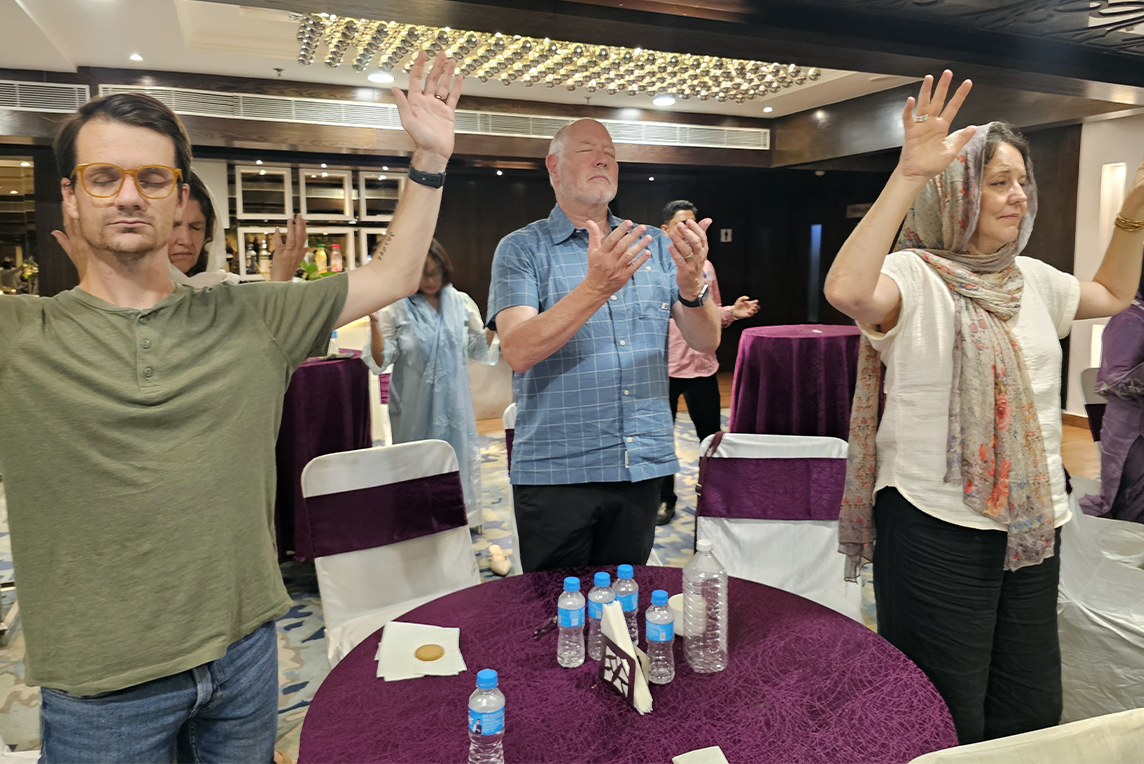
Brandon, left, worships at the conference.
I heard dozens of stories of God miraculously healing sicknesses, people overcoming addictions, demons being exorcised, and lives being transformed. One man shared the story of being plagued with a stutter from when he was a young boy. Then, while a group from the church was praying over him, he coughed up a hairball and was released from his stutter — and now leads worship at his church. Through these stories we caught a glimpse of Christ’s Lordship.
Yet Christ is also present as the suffering servant. Stories of healing were balanced out with stories of continued suffering, mental illness, and domestic and community violence. The cost of following Jesus is great there. I got to know a man whose family kicked him out at 16 after he decided to attend a Christian worship service. And the fear of being persecuted by local government and community leaders shrouded our gathering time together. These pastors were acquainted with suffering and found great comfort in God’s continued presence with them in it.
Sowing Seeds of Faith
The conference was organized by a pastor named Sanjeev, a leader of the Noor Network. (Sanjeev’s name has been changed to ensure his safety.) This is a network of churches with a mission to connect with unreached people groups, which Frontier Fellowship defines as a community that does not have any indigenous church. That means for Sanjeev and others, the best — and sometimes only — way to reach these groups is by planting a new church. Once someone from a local community comes to know Christ, they are encouraged to go back to their neighbors and form a worshiping space. For many leaders, this is within their homes. I met a man from a Sikh village who added a second story onto his house just to be used as a worshiping space for 24 other believers who have come to follow Christ . He’s just one fruitful example of how people are encouraged to take the gospel to their own spaces and begin new worshiping communities.
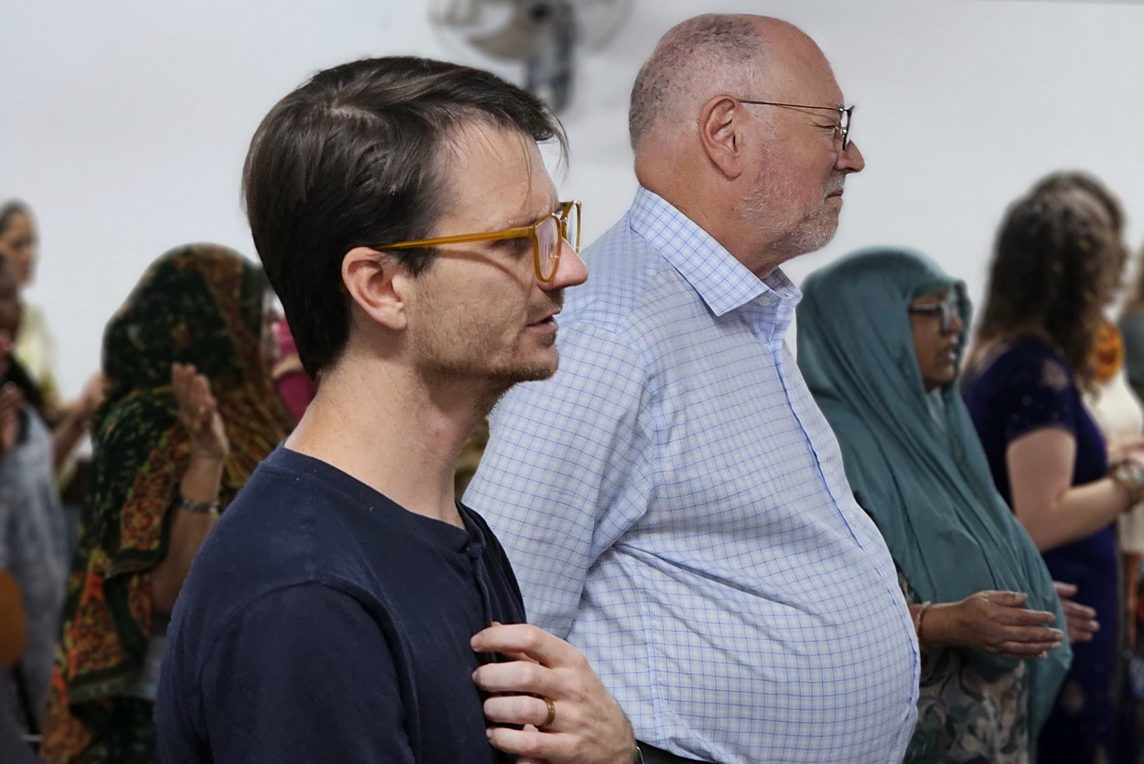
Along with local residents, Brandon joined a worship service at Pastor Sanjeev’s church.
When Pastor Sanjeev started his ministry 15 years ago, there were two families in his church. Now, the 150 pastors at this conference had been discipled personally by Sanjeev or by one of his disciples. In the last year, he directly commissioned seven church plants within his city. Each of these pastors has a congregation of potential church planters, who will continue to sow seeds of faith in their local communities.
I was struck by the humility and earnestness of Sanjeev. Instead of building a large church focused on himself as leader, he continued to send others out and distribute leadership in a manner that points to Christ’s headship. And as a result, the gospel is reaching places it never would have otherwise.
There was also an element to the conference that felt like an early Church Council, like Nicaea. Leaders throughout the network vocalized opinions on the ethics of an indigenous North Indian church, which continually pointed us to the Scriptures and Creeds. I heard discussions about whether a Sikh who becomes a believer must take off the turban, whether it was okay to eat food offered to a Hindu idol as an act of hospitality, and whether it was okay to partake in cultural festivals that honored other gods. These are questions without easy answers, but they were handled tactfully and with respect.
Much of the teaching element of the conference focused on representing the orthodox faith according to Scripture and the Apostles’ Creed. These pastors are so eager to share the gospel in their communities, but most of them have received no formal religious training and some of them are unable to read or write, so basic Christian teaching was a need for many of the leaders who earnestly sought to follow Jesus and avoid heresy.
The conference wrapped up with a group teaching us Americans a Punjabi dance. The joy was palpable, the laughter contagious, the Spirit’s presence undeniable.
Feeling God’s Hand
Outside of the conference, we were able to visit many cultural sites, including the Golden Temple, the holiest site in Sikhism. It was incredible to witness the devotion of the Sikh people — they feed 100,000 people a day with free meals prepared by volunteers. We also visited the largest market in Asia while in Delhi, and saw miles upon miles of vendors selling their wares — everything from butter to car parts. We saw mosques and forts and quite a few coffee shops.
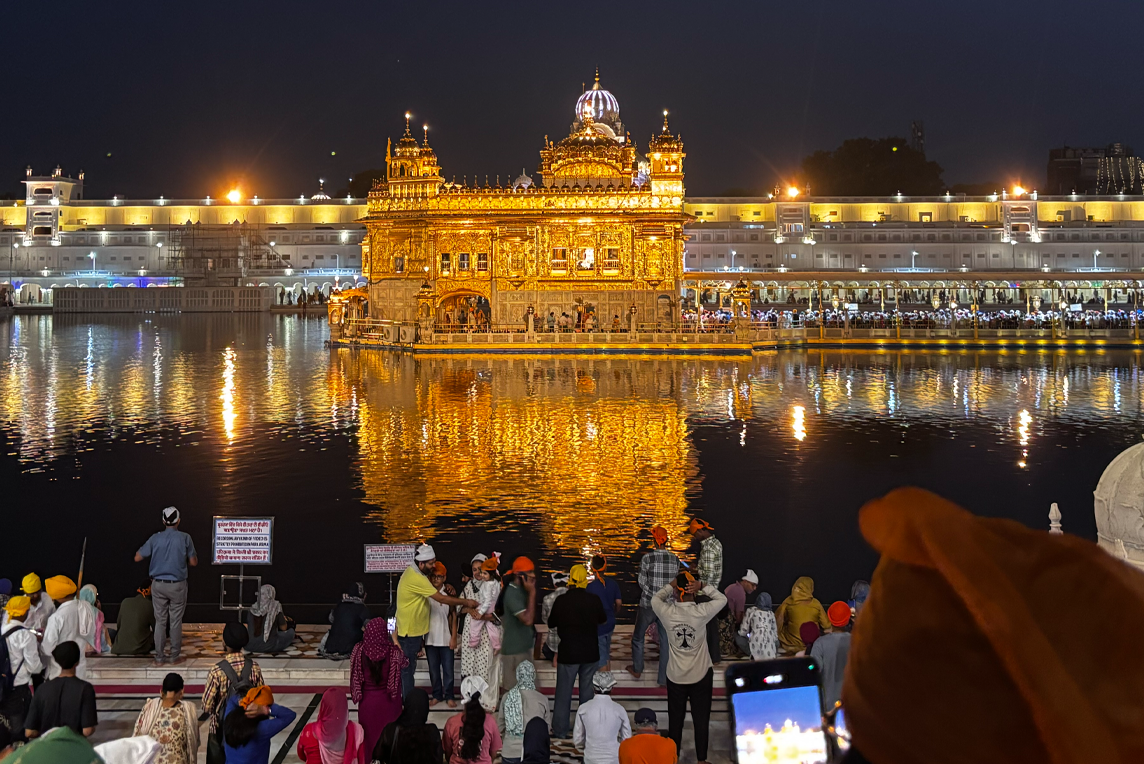
The Golden Temple, where 100,000 people a day receive free meals.
Most importantly, we met with pastors and church leaders, worshiped in people’s homes, and heard of the ways that the same God whom we worship in North Carolina is alive and active in India. While worshiping, I felt the Spirit’s presence in a way that I have not in a long time. It was as if I felt the weight of God’s hand was on me, blessing and sending me.
Thank you, Blacknall, not just for allowing me the opportunity, but for commissioning me so that I might be able to witness what God is doing for the unreached people groups of North India. I pray that what I’ve learned will help guide us as a community as we consider where God is calling us next.
“Jai Masih.” (Praise the Lord)